

For the plain-English definitions of the four pillars, see the four pillars explained. This piece walks through what they look like once they land in a real student file, using a single composite student ("Jordan", a Year 5 student, details changed) to trace one evidence trail from need through to monitoring.
A teacher may be making reasonable adjustments every week, speaking with parents, reviewing student progress, and noticing changes in need. But if those actions sit in different emails, lesson notes, meeting minutes, and memory, the full picture can be hard to prove. Following one student's file end to end shows how the four pillars connect in practice, not just in theory.
For Australian schools, this matters because NCCD is not only about counting students. It is about showing that disability-related support has been provided, reviewed, and recorded in a way that can be understood later.
Jordan's file: the four pillars at a glance
The Four Pillars of NCCD are the evidence areas a school should be able to show for each student included in the collection. The Australian Government's NCCD evidence guidance explains that records should cover identified need, adjustments, consultation or collaboration, and monitoring or review of the support provided through existing school records, not extra paperwork created only for NCCD.
The NCCD Portal describes the collection as an annual process that helps schools, education authorities, and governments understand the adjustments students with disability receive. The four pillars make that process more practical at the school level.
In plain English, each pillar answers a different question. Need asks what disability-related need is affecting the student's access or participation, and shows up as teacher observations, specialist reports, assessment notes, and learning profiles. Adjustments asks what the teacher or school changed, and shows up as modified tasks, visual supports, extra time, assistive technology, and support schedules. Consultation asks who was involved in planning or reviewing the support, and shows up as parent emails, meeting notes, student voice, and specialist input. Monitoring asks whether the adjustment is helping and what changed, and shows up as progress notes, work samples, behaviour data, and review comments.
A strong NCCD record should connect all four parts: the student need, the adjustment provided, the consultation behind it, and the review of whether it helped.
Pillar 1: Need
Need is the starting point. It explains why the adjustment exists. In NCCD, the focus is not just the diagnosis or label. The record should show how the disability affects the student's access, participation, communication, behaviour, learning, or wellbeing at school.
A formal diagnosis can help, but schools also consider functional need. A student with dyslexia may need text-to-speech because decoding affects reading fluency. A student with anxiety may need a predictable assessment process because panic symptoms affect participation. A student with hearing impairment may need seating changes, captioning, or assistive technology because spoken instructions are not always accessible.
The Disability Standards for Education 2005 sit behind the idea of reasonable adjustments. In everyday school language, that means teachers should understand the barrier first, then match the support to that barrier.
A few side-by-side examples make the difference clear. A weak record might say "student has ADHD". A stronger version says "student has difficulty sustaining attention during independent writing and often misses multi-step instructions". A weak record might say "student struggles with reading". A stronger version says "student's dyslexia affects decoding fluency, so reading-heavy tasks take longer without support". A weak record might say "student gets anxious". A stronger version says "student avoids oral presentations and shows physical anxiety symptoms before public speaking tasks".
Instead of writing "student has ASD", a teacher could write "student becomes distressed during unexpected timetable changes, so advance notice and a visual schedule are provided before transitions". The richer record shows the functional barrier and the response the school has chosen.
For more examples of what strong evidence can look like across the school year, the Superadjust NCCD Evidence Centre sits beside this article as a useful next-step resource for teachers and coordinators.
Pillar 2: Adjustments
Adjustments are the teaching, learning, assessment, environment, or support changes made so the student can participate on the same basis as their peers. This may include small classroom changes, targeted support, modified resources, support from another staff member, or more intensive individual planning.
The adjustment should match the need. If the need is sensory overload, the adjustment may be a quiet space, headphones, or a predictable transition routine. If the need is written expression, the adjustment may be a writing scaffold, speech-to-text, a reduced copying load, or extra processing time.
Authority guidance on the NCCD level of adjustment is helpful when schools need to think about the frequency and intensity of support across QDTP, Supplementary, Substantial, and Extensive adjustments.
Adjustment records that hold up later
A useful adjustment record usually answers four questions. What was changed? When did it happen? Which student need did it respond to? Was it part of regular support or a one-off change?
Strong adjustment records share the same shape. They translate the classroom moment into a plain-English record. "Teacher simplified a reading task" becomes "provided a simplified text and audio support for the science reading task because decoding difficulty affected access to the content". "Student sat near the front" becomes "seated student near the teacher during explicit instruction to reduce missed verbal instructions linked to hearing difficulty". "Student had extra time" becomes "provided 15 minutes of extra time for written assessment because processing speed affected task completion".
For schools that want a faster way to keep evidence organised, Superadjust evidence logging for teachers helps teachers log NCCD evidence in 3 seconds while keeping each record tied to the right pillar.

Pillar 3: Consultation
Consultation shows that the student, parent or carer, relevant staff, and sometimes specialists have had input into the support. It does not need to be dramatic or formal every time. A short parent email, a student check-in, a learning support meeting, or a specialist recommendation can all help show that support was planned with the right people involved.
Consultation is often the pillar that gets missed because teachers are already talking to families and support staff. The issue is not the conversation. The issue is whether the conversation has been recorded clearly enough to be found later.
Official NCCD evidence guidance on the NCCD Portal notes that schools can use existing records of consultations, adjustments, assessments, and learning information. That is good news for busy staff: the goal is not to create a second set of admin, but to keep the records that already show the work.
What consultation can look like
A parent email is most useful when it captures the date, the concern discussed, the adjustment agreed, and the next step. Student voice is most useful when it captures what support the student says helps or does not help. A staff discussion is most useful when it captures who was present, what support was planned, and who will follow up. Specialist input is most useful when it captures the recommendation, the classroom action that followed, and the review date.
If consultation is only stored in personal inboxes, it is hard to review school-wide. Coordinators need a shared view of whether each student has consultation evidence, not just adjustment notes. Superadjust coordinator software is a practical next step for schools building a clearer process across multiple teachers, classes, or campuses.

Pillar 4: Monitoring and review
Monitoring proves that the school did not just provide an adjustment once and move on. It shows whether the support helped, whether the student's need changed, and whether the adjustment should continue, increase, reduce, or be replaced.
This can be simple. A teacher note after a lesson. A reviewed work sample. A behaviour tally. A reading fluency check. A parent follow-up. A short review comment in an individual plan. The point is to show professional judgement over time.
NCCD evidence also needs to support the 10-week evidence period where relevant. A student does not need the same adjustment every day, but the school should be able to show a sustained pattern of reasonable adjustments across the required period.
A weak monitoring note might say "support is working". A stronger version says "with text-to-speech, student completed the comprehension task independently for 4 of 5 questions; continue support next week". A weak monitoring note might say "behaviour improved". A stronger version says "student used the break card twice during group work and returned within five minutes each time; fewer task refusals than last week". A weak monitoring note might say "parent updated". A stronger version says "parent reported the visual schedule is also helping morning transitions at home; continue school-home strategy for the next fortnight".
Each of those notes does the same job: it shows the adjustment in action and how the school read its impact. That is the heart of the four NCCD evidence pillars in the Evidence Centre. The record set should walk through need, support, conversation, and review without gaps.
How to keep the four pillars connected
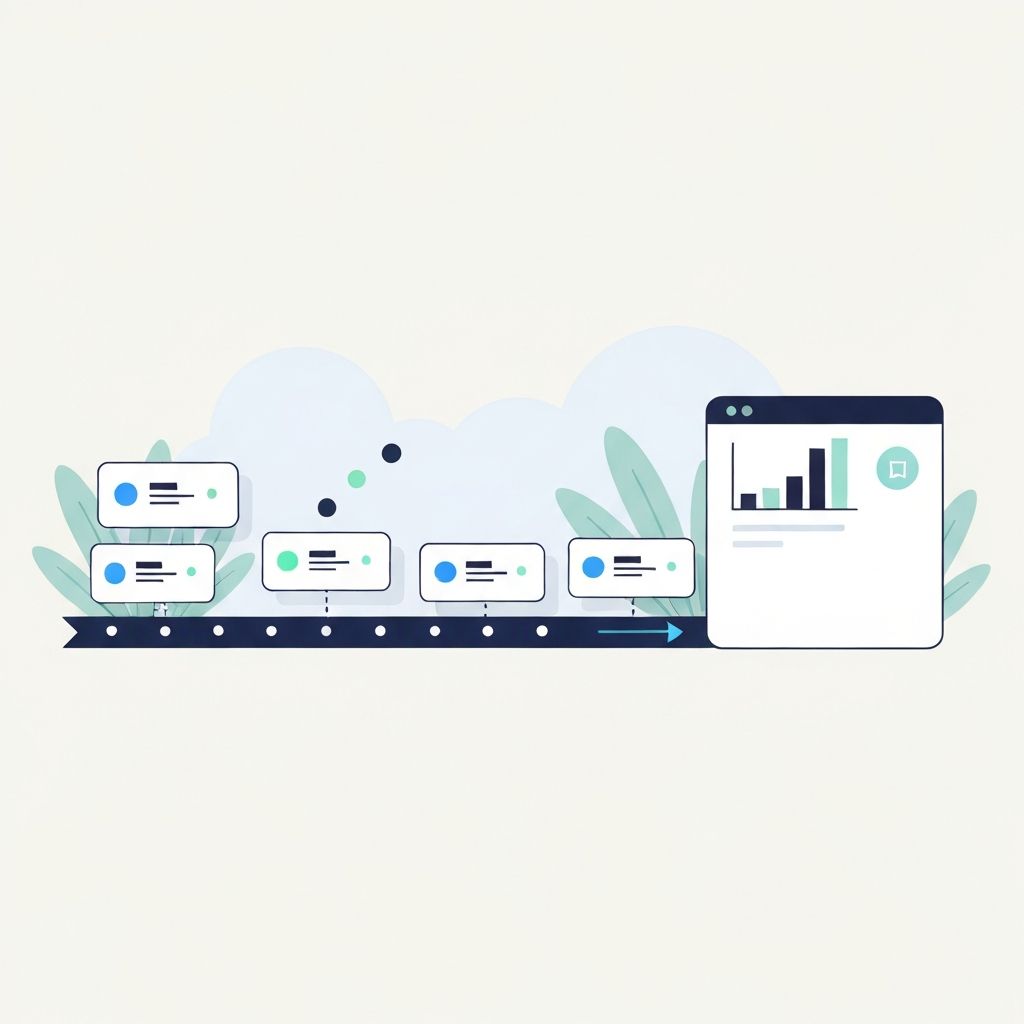
The biggest NCCD evidence problem is not always missing effort. It is disconnected proof. The need is in a report. The adjustment is in a lesson plan. The consultation is in an email. The review is in a teacher's notebook. Each piece may be valid, but the story takes too long to rebuild.
A simple record structure helps every teacher and coordinator see the same thing.
The one-record framework
Use this pattern when logging NCCD evidence. Need: what barrier is affecting the student? Adjustment: what was changed or provided? Consultation: who has been involved or informed? Monitoring: what happened after the support was used?
A working example might read: "Student used text-to-speech during independent reading because dyslexia affects decoding fluency. Parent confirmed the same support helps with home reading. Student completed the task with fewer prompts than last week, so the adjustment will continue next lesson."
That record does more than say "support was provided". It connects need, adjustment, consultation, and monitoring in one place. It also gives the NCCD coordinator a clearer view of whether the student's evidence is developing across all four pillars.
Quick checklist for teachers and coordinators
Before a student record is considered ready, check that the functional need is clear, the adjustment matches that need, consultation is recorded rather than only remembered, monitoring shows whether the support helped, evidence covers the required period, the adjustment level matches the intensity and frequency of support, and the records can be found by the people who need them.
The Four Pillars of NCCD make the work easier to check because they turn a messy evidence trail into a simple question: can we show the need, the support, the conversation, and the review?
Teachers are already doing much of this work. The task is to make it visible, connected, and easy to retrieve when Census Day approaches.